During a late-night feeding, your baby keeps pulling at the nipple, sucking hard and becoming frustrated while the bottle barely empties. At the next feeding, you try a faster nipple—but milk runs from the corners of your baby’s mouth and they begin to cough.
Situations like this are often the first sign that the nipple flow does not match the baby’s current feeding skills. Choosing the right flow is less about following the number on the package and more about noticing what happens during each feeding.
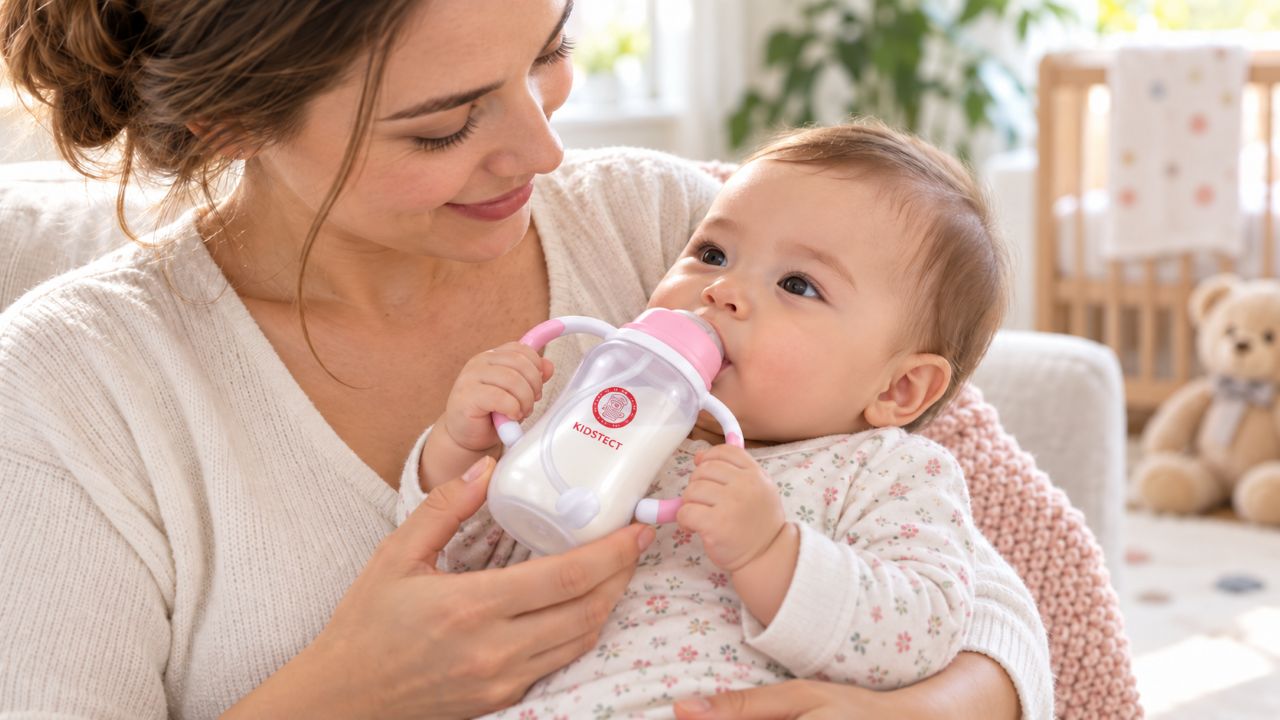
What Do Baby Bottle Nipple Sizes Mean?
“Baby bottle nipple size” usually refers to milk flow, not the physical dimensions of the nipple.
- Nipple size or level is the label used by a brand, such as Size 1, Size 2 or Size 3.
- Flow rate describes how quickly milk passes through the nipple opening.
- Nipple shape refers to the nipple’s design, such as round, flat, wide-base or orthodontic.
Within the same product range, a higher level generally provides a faster flow. However, nipple levels are not standardized across brands. Research comparing commercially available nipples has found wide differences in flow, even among products with similar labels. A Size 1 from one brand may therefore flow faster than another brand’s “Slow Flow” nipple.
Baby Bottle Nipple Size Chart by Age
The following baby bottle nipple size chart shows common starting points. These general guidelines for bottle nipple sizes by age should always be considered alongside the baby’s feeding ability.
| Nipple Size | General Flow | Common Starting Age | Suitable Situations |
|---|---|---|---|
| Preemie/Size 0 | Extra slow | Premature babies | Babies who require more controlled milk flow; professional guidance may be needed |
| Newborn/Size 1 | Slow | Birth–3 months | Most newborns, combination-fed babies and babies starting bottle-feeding |
| Size 2 | Medium | Around 3–6 months | Babies who consistently struggle with a slower flow but can manage a moderate flow |
| Size 3 | Fast | Around 6 months+ | Older babies who repeatedly show that a medium flow is too slow |
| Variable/Y-cut | Variable | Not age-based | Approved thicker liquids when recommended by a healthcare professional and permitted by the manufacturer |
These ages are starting points, not deadlines. Some babies remain comfortable with one nipple level for much longer. Only consider changing the flow when the current nipple repeatedly makes feeding too difficult or too fast.
What Nipple Size Is Best for a Newborn?
Most full-term newborns can start with a newborn bottle nipple labeled Newborn, Slow Flow or Size 1. A slower flow gives a young baby more time to coordinate sucking, swallowing and breathing.
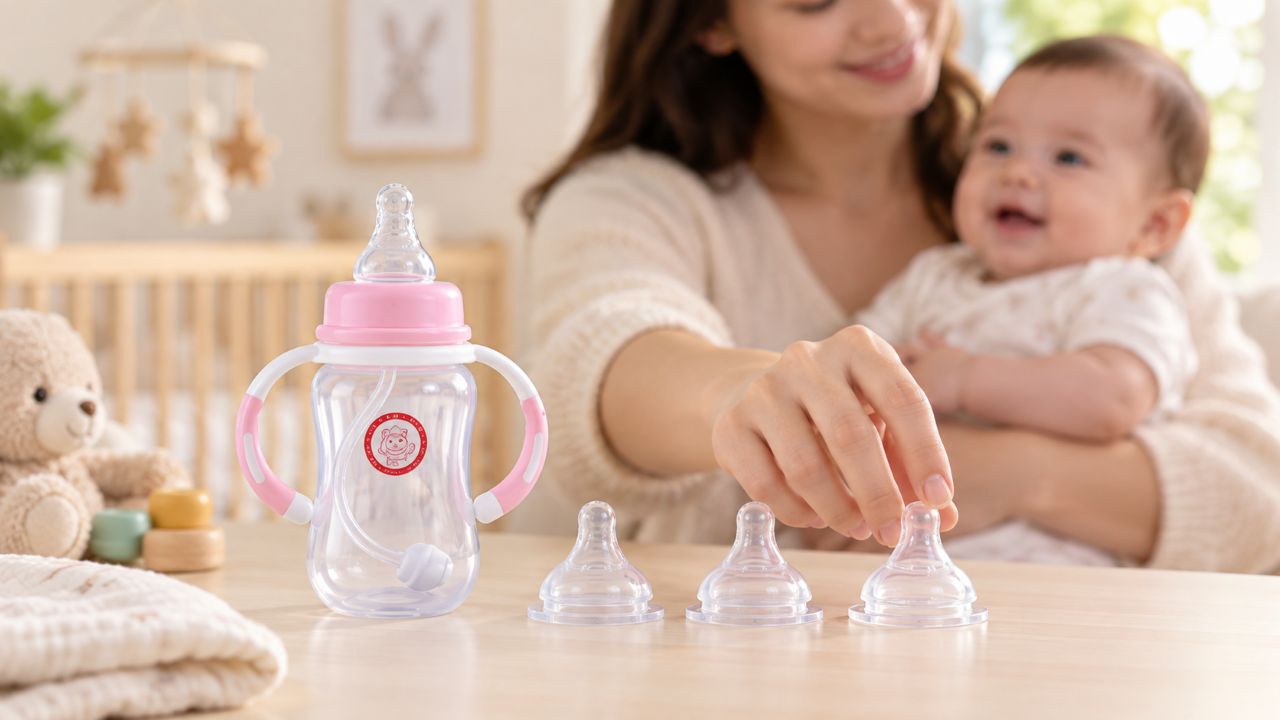
Consider the following when choosing:
- Full-term newborns: Newborn, Slow Flow or Size 1 is usually a practical starting point.
- Premature babies: An extra-slow or preemie nipple may provide more controlled flow. Ask a pediatrician or feeding specialist for guidance.
- Combination-fed babies: A slow flow allows the baby to control the feeding pace when moving between breast and bottle. Parents combining breast and bottle-feeding can also read our guide to introducing a bottle to a breastfed baby.
- Babies with feeding difficulties: The appropriate nipple should be selected with professional support.
How to Tell if the Nipple Flow Is Too Slow or Too Fast?
The right nipple flow should allow your baby to suck, swallow and breathe at a comfortable pace. Look for a pattern across several feedings rather than judging from one unusually slow or difficult bottle.
| Flow Is Too Slow | Flow Is Too Fast | Flow Appears Suitable |
|---|---|---|
| Sucks forcefully but swallows infrequently | Coughs, chokes or sputters | Maintains a steady suck-swallow-breathe rhythm |
| Repeatedly collapses the nipple | Milk leaks heavily from the mouth | Takes natural pauses |
| Takes noticeably longer to finish the same amount | Gulps or swallows rapidly | Has little milk leakage |
| Pulls, bites or becomes frustrated with the nipple | Pushes the bottle away or turns the head | Appears calm during feeding |
| Falls asleep from effort before finishing | Has more spit-up or discomfort after feeding | Appears relaxed and satisfied afterward |
One slow feeding does not automatically mean a faster nipple is needed. Feeding may be affected by tiredness, hunger or distractions.
When to Change Baby Bottle Nipple Size?
Knowing when to change baby bottle nipple size depends on consistent feeding behavior—not simply the age printed on the package.
Consider moving up one level when the current nipple repeatedly causes excessive effort, long feedings or frustration. Change only one level at a time so that you can observe how your baby responds.
When Do You Switch to Size 2 Nipples?
Consider trying a Size 2 nipple when:
- The same amount of milk consistently takes much longer to finish.
- Your baby sucks repeatedly but swallows infrequently.
- Your baby pulls, bites or becomes frustrated with Size 1.
- The nipple continues to collapse after the vent and bottle assembly have been checked.
- Your baby becomes tired before finishing the usual amount.
After introducing Size 2, watch the first few feedings carefully. Return to Size 1 if your baby starts coughing, gulping, leaking milk or repeatedly pulling away. If Size 1 still supports calm, rhythmic feeding, there is no need to switch simply because your baby has reached three months.
How to Choose a Compatible Bottle and Nipple?
A nipple should fit the bottle securely and work correctly with its neck and venting structure. Before choosing, check:
- Bottle compatibility: Use a nipple designed for the bottle’s standard, wide or extra-wide neck.
- Flow options: Confirm that suitable flows are available for the intended feeding stages.
- Nipple material: Consider softness, durability and resistance to repeated cleaning.
- Venting design: Make sure the nipple and anti-colic components function together properly.
OYABABIES baby feeding bottles are available in different bottle materials like PP, PPSU, Tritan and glass, with standard, wide and extra-wide neck designs and silicone feeding components.
Retailers, distributors and baby-product brands can select from existing bottle designs or discuss custom materials, colors, logos and packaging through OEM/ODM services.
Explore our baby feeding bottles or contact OYABABIES to discuss your product requirements.
FAQ
What age is a Size 1 nipple for?
A Size 1 nipple is commonly used as a starting option for newborns through approximately three months. However, the recommended Size 1 nipple age varies between brands because nipple flow rates are not standardized. Continue using it as long as your baby feeds comfortably without excessive effort.
What age is a Size 3 nipple for?
The typical Size 3 nipple age is around six months and older. It is intended for babies who can comfortably manage a faster flow, but not every baby needs to progress to Size 3.
Can a baby stay on Size 1 nipples?
Yes. A baby can stay on Size 1 as long as feeding remains comfortable and effective. There is no need to increase the flow if your baby swallows steadily, takes natural pauses and consumes enough milk without becoming tired or frustrated.
Are Round or Flat Bottle Nipples Better?
Neither shape is best for every baby. When comparing round nipple bottles vs flat nipples, consider how easily your baby latches and maintains a steady feeding rhythm.
Round nipples are symmetrical and do not require a particular orientation. Flat or orthodontic nipples must usually be positioned correctly and may suit some babies better than others. Shape influences latch and mouth position, while nipple size primarily controls milk flow.