A parent on Reddit recently asked a question many first-time parents have before their baby arrives: “We already have six bottles—but is that enough?
The replies ranged from two bottles to more than twelve. Some parents washed bottles after every feed, while others preferred having a full day’s supply. Several also warned against buying too many before knowing which nipple and bottle their baby would accept.
So, how many baby bottles do you actually need? For most families, the answer depends on feeding method, age and how often bottles are washed.

How Many Baby Bottles Do I Need? Quick Answer
Most families with one baby need 2 to 10 baby bottles, depending on how often their baby takes a bottle and how frequently the bottles are washed.
| Feeding situation | Recommended starting number | When you may need more |
|---|---|---|
| Mainly breastfeeding | 2–3 | Frequent pumping, daycare or caregiver feeds |
| Combo feeding | 4–6 | Several bottle feeds each day |
| Exclusive bottle feeding | Start with 4–6, then increase to 8–10 | Washing and drying bottles only once per day |
Avoid buying a large set of one bottle style before your baby arrives. Some babies prefer a particular nipple shape, flow rate or bottle design. Start with a small selection, identify which option your baby accepts and then build a practical rotation based on the number of bottle feeds between washing sessions.
How Many Bottles Will I Need for a Newborn?
Newborns may feed 8–12 times in 24 hours, so bottles can move from clean to used very quickly. The CDC notes that most formula-fed newborns feed this often, although every baby’s feeding pattern is different.
If you plan to bottle-feed exclusively, start with 4–6 bottles until you know which bottle and nipple your baby accepts. You can then increase your supply to 8–10 bottles. Six bottles can usually work if you wash them twice a day, while eight to ten make once-daily batch washing easier.
Whatever number you choose, keep 1 or 2 clean bottles in reserve for nighttime feeds, outings or when the rest are still being washed and dried.
How Many Bottles Do You Need by Feeding Method?
Your feeding method affects how many bottles pass through your daily washing and drying cycle. However, the most useful number is based on how many feeds your baby actually takes from a bottle.
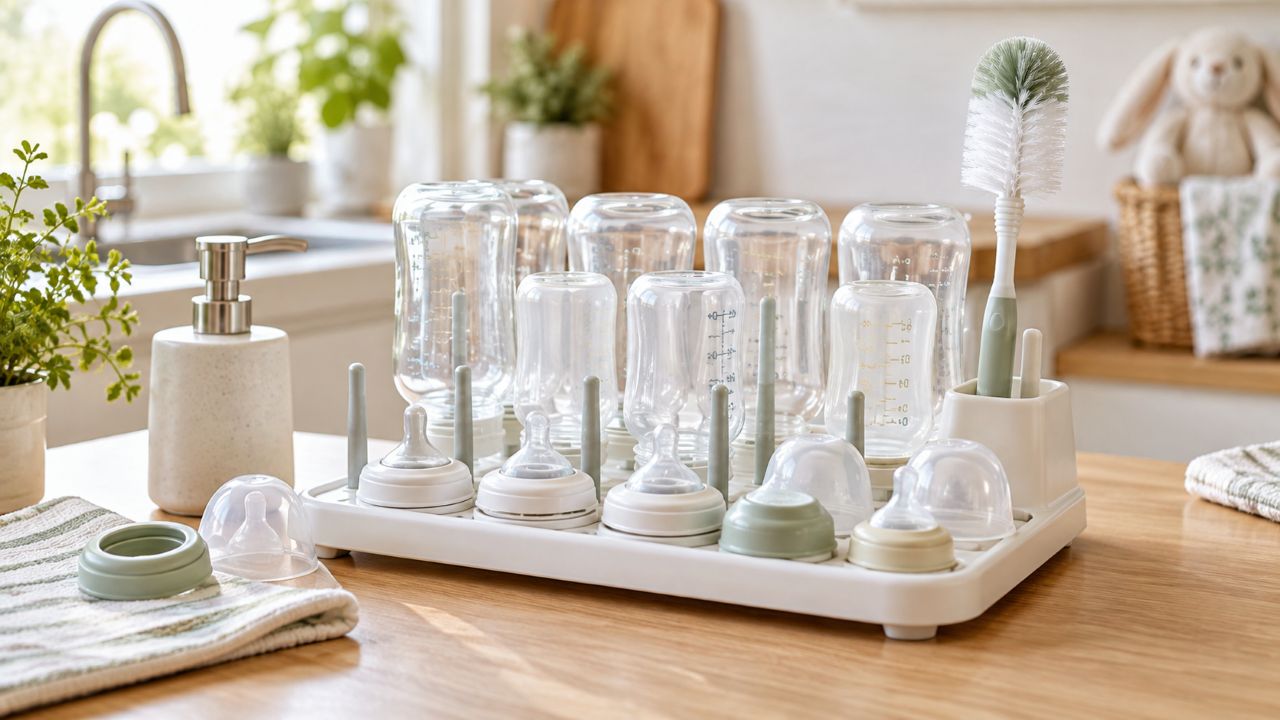
How Many Baby Bottles Do I Need If Breastfeeding?
If you mainly nurse and use a bottle only occasionally, 2–3 bottles should be enough. For daycare, calculate the number of bottles your baby will use while away and include one clean spare. If you are preparing for the first bottle, see our guide to introducing a bottle to a breastfed baby.
How Many Baby Bottles Do I Need If Combo Feeding?
Most combo-feeding families can manage with 4–6 bottles. Base your decision on the number of daily bottle feeds rather than the “combo feeding” label. Four may be sufficient for one or two bottles a day, while six provides more flexibility when several feeds use expressed milk or formula.
How Many Bottles for Exclusive Bottle Feeding?
For exclusive bottle feeding, 8–10 bottles usually provide a comfortable rotation. Families who wash bottles more frequently may manage with 6.
How Does the Bottle Need Change as Your Baby Grows?
Bottle needs often change as babies begin drinking more at each feed and feeding less frequently. If you are wondering how many baby bottles you need for a 3-month-old or 6-month-old, use the following numbers as a starting point rather than a fixed rule.
| Baby’s age | Suggested bottle rotation | What changes |
|---|---|---|
| Newborn to 3 months | 6–10 for full bottle feeding | Frequent feeds with smaller amounts |
| Around 3–6 months | 5–8 | Baby may drink more at each feed |
| Around 6–12 months | 4–6 | Solid foods are introduced gradually |
| Around 12 months | Depends on the transition plan | Bottle use may begin shifting toward cups |
These ranges are starting points rather than fixed requirements. Your baby may need more or fewer bottles depending on feeding frequency, washing schedule and whether bottles are needed for daycare. You also do not need to purchase a full year’s supply at once, as bottle size, nipple flow and feeding habits may change over time.
How to Calculate the Right Number for Your Routine?
The easiest way to estimate how many bottles you need is to look at your feeding and washing schedule:
Bottles needed = bottle feeds between washing sessions + 1–2 spare bottles
For example:
- Eight bottle feeds with one nightly wash: Keep 8–10 bottles.
- Six bottle feeds with morning and evening washes: Keep 4–5 bottles.
- One or two bottle feeds per day: Keep 2–3 bottles.
A consistent baby bottle cleaning and sterilizing routine can reduce the number of bottles you need in rotation.
FAQ
How Many Baby Bottles Do I Need and What Size?
Most families need 2–10 bottles, depending on their feeding method and washing schedule. For size, start with two to four 4- or 5-ounce bottles for smaller feeds, then add 8- or 9-ounce bottles as your baby’s intake increases. Avoid buying every bottle in the same size before you know which design and nipple your baby accepts.
Do Babies Need 4 or 8 oz Bottles?
Newborns often find 4-ounce bottles lighter and more practical for smaller feeds. Eight-ounce bottles hold more milk and can remain useful as a baby grows. However, bottle capacity does not determine nipple flow. A newborn can use a larger bottle with a suitable slow-flow nipple, so check the signs before changing baby bottle nipple sizes and flow rates.
How Many Baby Bottles Do I Need for Twins?
For twins who receive most or all feeds by bottle, 12–16 bottles in total can provide a practical rotation. Families who wash bottles several times a day may manage with fewer. Start with a smaller selection until both babies accept the bottle style, as twins may not necessarily prefer the same nipple shape or flow rate.