A first-time parent on Reddit recently asked when other families first introduced a bottle. A lactation specialist had suggested waiting until breastfeeding was well established—possibly three to six weeks—but the parents hoped to share night feeds so that each could get more sleep.
The responses showed why there is no single answer. Some families introduced a bottle in the hospital because of latching or milk-supply difficulties. Others started around two to five weeks, while several parents said that waiting longer made bottle acceptance more difficult. These are personal experiences rather than medical rules, but they reflect the practical concerns many families face.
So, when should you introduce a bottle to a breastfed baby? The best timing depends on how breastfeeding is progressing, why you need the bottle and how soon another caregiver will need to feed your baby.
When to Introduce a Bottle to a Breastfed Baby?
The right time depends on how breastfeeding is progressing and why your baby needs a bottle.
For most families, it is reasonable to wait until feeding at the breast feels comfortable and consistent. This often happens after the first few weeks, but a baby’s feeding progress matters more than reaching a particular age.
Earlier introduction may be necessary if the baby has difficulty latching, needs supplemental milk or must temporarily be fed by another caregiver. In these situations, follow guidance from a pediatrician or lactation consultant rather than waiting for breastfeeding to become fully established.
If you have an upcoming deadline, such as returning to work or starting daycare, begin practicing before bottle feeding becomes essential. A gradual introduction gives your baby time to learn the new feeding method and gives you time to address possible bottle refusal without making each attempt stressful.
Introducing a Bottle at Different Ages
The way you introduce a bottle may change as your baby develops and forms stronger feeding preferences.
| Age | What to Consider | Suggested Approach |
|---|---|---|
| Newborn | Breastfeeding skills and milk supply may still be developing. However, some newborns need bottles for medical or feeding reasons. | Follow guidance from a pediatrician or lactation consultant instead of waiting for a specific week. |
| Around 3 months | The baby may already have a clear preference for feeding at the breast. | Offer small amounts when the baby is calm and let another caregiver try. |
| Around 4 months | The baby may be more aware of the feeding position, environment and caregiver. | Try a quiet setting or different position, changing only one factor at a time. |
| Around 6 months | Some babies can begin learning to drink from an open or free-flow cup. | If the baby continues to refuse bottles, ask a healthcare professional whether moving directly to a cup is appropriate. |
The NHS notes that babies aged six months or older who can drink milk from a cup may not need to start using a bottle.
How to Introduce a Bottle to a Breastfed Baby Step by Step?
If you are wondering how to get a baby to take a bottle, focus on creating a calm, low-pressure experience. The first attempt does not need to replace an entire breastfeeding session.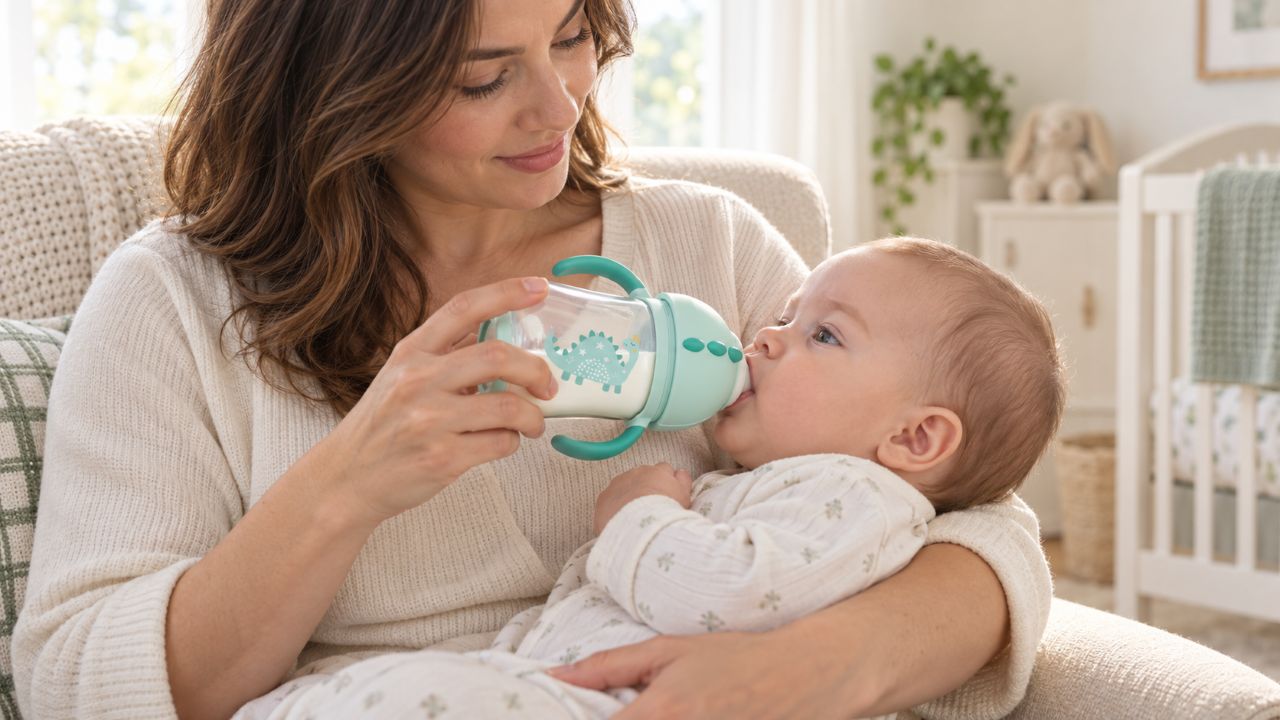
1. Choose a calm time
Offer the bottle when your baby is awake, relaxed and showing early hunger cues, such as rooting or bringing their hands to their mouth. Do not wait until they are crying intensely.
2. Start with a small amount
Use a small quantity of expressed breast milk for the first attempt. This reduces waste if your baby only takes a few sips.
3. Ask another caregiver to offer it
Some babies are more willing to try a bottle when the breastfeeding parent leaves the room and a partner or caregiver handles the feed.
4. Let your baby accept the nipple
Gently touch the nipple to the upper lip and wait for your baby to open their mouth. Avoid pushing it in or forcing them to suck.
5. Use paced bottle feeding
Hold your baby in a semi-upright position with their head and neck supported. Keep the bottle nearly horizontal so the milk does not flow too quickly, and allow short pauses based on your baby’s sucking, swallowing and breathing rhythm. Stop when your baby shows signs of fullness rather than encouraging them to finish the bottle.
6. Stop before it becomes a struggle
If your baby turns away, cries or repeatedly pushes out the nipple, pause and try again at another time.
Why a Breastfed Baby Won’t Take a Bottle?
A baby may also refuse because the nipple flow is too fast or too slow, the milk tastes or feels different, or the feeding position and surroundings are unfamiliar. Attempts made when the baby is very hungry, tired or already crying are also less likely to succeed. Some babies resist when the breastfeeding parent is nearby because they continue to expect the breast.
Previous stressful attempts can make the reaction stronger. Physical discomfort—including nasal congestion, reflux, oral soreness or an ear problem—may also contribute to a baby refusing a bottle.
What to Do About Bottle Refusal?
Rather than repeating the same unsuccessful approach, change one factor at a time. Test the milk temperature, nipple flow, feeding position or environment separately so you can identify what makes a difference. Keep the practice low-pressure and stop if your baby becomes distressed.
Choosing the Right Bottle and Nipple
Start with a slower-flow nipple, but remember that age labels and nipple shapes do not guarantee acceptance. Try a bottle before buying a large quantity, and adjust the flow according to how your baby feeds. You can learn more in our guide to baby bottle nipple sizes and flow rates.
OYABABIES offers PP, PPSU, Tritan and glass baby bottles in multiple capacities, with matching nipples and accessories. Wholesale buyers can also customize bottle materials, colors, capacities, packaging and branding for different product lines. Compare bottle materials, nipple designs and feeding features in our best baby bottles guide.
FAQ
When Can I Introduce a Bottle to a Newborn?
A newborn may use a bottle when expressed milk, supplemental feeding or another caregiver is needed. If your baby has difficulty latching, transferring milk or gaining weight, follow a pediatrician’s or lactation consultant’s advice rather than waiting for a specific age.
How often should you offer a bottle to a breastfed baby?
There is no required schedule. If regular bottle feeding will be necessary, occasional practice can help keep the experience familiar. Follow your baby’s cues and avoid forcing a bottle simply to meet a fixed routine.
Can introducing a bottle affect breast milk supply?
The bottle itself does not reduce milk supply. However, regularly replacing breastfeeding sessions without expressing milk may signal the body to produce less. The effect depends on feeding frequency, milk removal and whether the bottle contains expressed milk or formula.
Does introducing a bottle cause nipple confusion?
Some babies switch easily between breast and bottle, while others develop a preference for a particular flow or feeding method. A suitable nipple flow and responsive feeding approach may be more useful than focusing only on nipple shape.
What if my breastfed baby won’t take a bottle before daycare?
Start practicing before daycare begins, preferably with the caregiver who will handle the feeds. Try when your baby is calm, change only one factor at a time and avoid force. Ask a pediatrician or feeding specialist for help if refusal continues or affects milk intake.